Table Rate Shipping by Class, Weight, Price, Quantity & Volume for WooCommerce 1.3.0
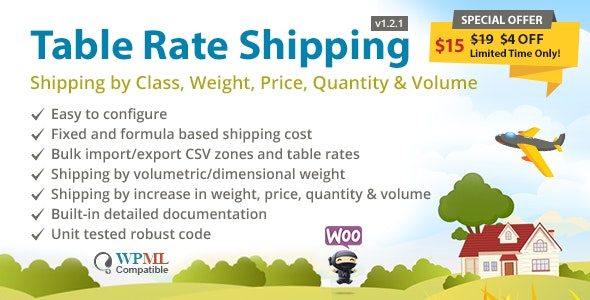
Table Rate Shipping by Class, Weight, Price, Quantity & Volume for WooCommerce streamlines charges by class, weight, price, quantity and volume. This shipping plugin delivers precise, flexible rules that save time and reduce cart abandonment. Designed for easy setup and deep WooCommerce integration, explore it today.
Description
Table Rate Shipping by Class, Weight, Price, Quantity & Volume for WooCommerce is a shipping plugin that helps you calculate delivery charges using cart totals instead of one-size-fits-all rates. It lets you set rules based on shipping class, total weight, total price, total quantity, and total volume of the products in a customer’s cart.
This approach reduces manual adjustments and helps you avoid overcharging or undercharging that can hurt trust and conversion. Built for WordPress and deeply integrated with WooCommerce, it supports straightforward configuration and shipping calculations that match real-world carrier pricing logic.
Main Features
- Shipping class-based rules — Charge different rates for products assigned to specific WooCommerce shipping classes.
- Cart total weight pricing — Apply table rates using the sum of product weight in the cart.
- Cart total price tiers — Set shipping costs based on the cart’s total value.
- Quantity-based calculations — Scale shipping rates according to total product quantity in the cart.
- Volume-based pricing — Use cart total volume to model shipping for bulky items.
- Table-rate rule setup — Define rate ranges in a table to control how charges change across thresholds.
- WooCommerce cart integration — Automatically calculate from the active cart contents during checkout.
- Easy admin configuration — Manage shipping logic within the WordPress/WooCommerce workflow.
Benefits
- More accurate shipping — Totals-driven rules help match charges to what’s actually in the cart.
- Less setup time — Centralized table logic reduces the need for repetitive rate configurations.
- Better UX — Customers see shipping totals that feel consistent with product differences.
- Higher conversion likelihood — Clear, predictable costs can lower friction and cart abandonment.
- Flexible shipping strategies — Combine class, weight, price, quantity, and volume logic to fit different catalogs.
- Scalability for product growth — As inventory changes, rules continue to apply based on cart data.
Who is it suitable for?
- WooCommerce stores with multiple shipping classes and varying product types.
- Shops that price shipping by weight and need tiered ranges.
- Catalogs where shipping depends on dimensions/volume or bulky items.
- Businesses that want rates influenced by cart value, quantity, or both.
- Agencies managing shipping rules across several WooCommerce sites.
- Online retailers aiming to reduce checkout surprises from complex shipping costs.