OASIS Workflow Editorial Comments 2.5
Description
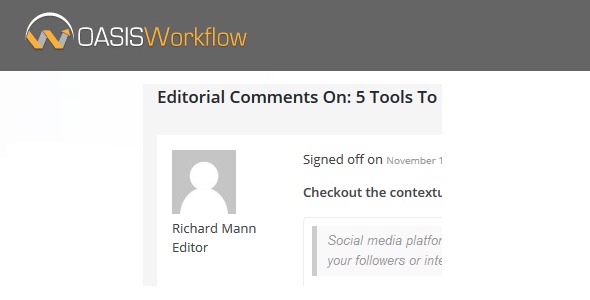
OASIS Workflow Editorial Comments is a WordPress plugin designed for precise editorial collaboration. Instead of placing review notes in a general comment thread, it helps editors attach contextual feedback directly to the exact passage that needs attention.
This solves a common problem in content workflows: authors struggle to interpret what a comment refers to, and editorial notes become longer and harder to follow due to added context. By focusing feedback where it matters, reviews become clearer and less time-consuming.
With workflow sign-off style editorial comments, teams can streamline approvals and keep the editorial process organized inside their WordPress publishing routine. The result is faster, more accurate iteration from draft to publication.
Main Features
- Passage-level feedback — Editors can link comments to specific sections of a post so the author knows exactly what to revise.
- Contextual editorial notes — Feedback is presented with the surrounding meaning, reducing the need for long explanations.
- Workflow sign-off comments — Supports editorial review notes that align with clear approval and sign-off steps.
- Cleaner review threads — Keeps comments more focused, avoiding scattered notes across a page.
- Author clarity — Makes it easier for writers to interpret feedback quickly and apply changes correctly.
- Streamlined editorial process — Reduces back-and-forth by connecting feedback to the exact content locations.
- WordPress integration — Works within the WordPress content workflow so teams can review and approve without leaving their publishing flow.
- OASIS workflow add-on — Targets editorial comment use cases where contextual review and sign-offs matter.
Benefits
- Faster approvals — Clear passage-specific sign-offs help move drafts toward publishing with fewer delays.
- Better UX for authors — Writers receive feedback that is easy to interpret and directly actionable.
- Higher content clarity — Contextual notes improve readability and reduce misunderstandings during revisions.
- Reduced editorial overhead — Less time spent re-explaining what comments refer to during review cycles.
- More consistent collaboration — A structured feedback approach supports team workflows and review consistency.
Who is it suitable for?
- Editorial teams managing multi-author WordPress publishing
- Agencies with recurring content review and approvals
- Blog and magazine platforms using structured editorial workflows
- Content managers coordinating author feedback across drafts
- Organizations producing documentation or knowledge-base articles