Subdomain Pro 3.0.0
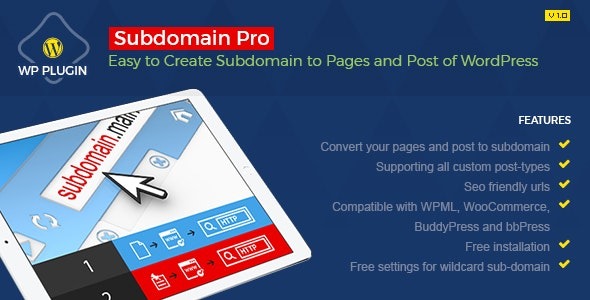
Subdomain Pro turns posts, pages, categories, and custom post types into sub-domains, boosting site performance and SEO. This WordPress solution lets you map content as sub-domains with minimal config, offering seamless integration and scalable architecture. Explore how subdomains can accelerate load times and enhance search visibility.
Description
Subdomain Pro is a WordPress plugin that converts posts, pages, categories, and custom post types into sub-domains. It helps you reorganize content into a scalable sub-domain architecture with minimal configuration, reducing the complexity of multi-site style setups. By mapping content to sub-domains, it can support faster page loading and a clearer separation of site sections. For WooCommerce stores, blogs, and content-heavy sites, this approach can also improve how pages are discovered and indexed. When used alongside Elementor-created layouts, themes, and existing WordPress templates, Subdomain Pro fits naturally into modern WordPress workflows.
Main Features
- Sub-domain mapping for posts — Automatically converts WordPress posts into sub-domains.
- Sub-domain mapping for pages — Creates sub-domains for selected WordPress pages without manual URL rebuilding.
- Category-based sub-domains — Turns categories into sub-domains for clearer content grouping.
- Custom post type conversion — Applies sub-domain behavior to any registered custom post types.
- Wildcard sub-domain support — Allows configuration for wildcard sub-domains when needed.
- Minimal setup configuration — Lets you enable sub-domain behavior with straightforward WordPress settings.
- Scalable content architecture — Supports creating multiple sub-domains as your WordPress structure grows.
- SEO-oriented content separation — Helps organize content into distinct sub-domain URLs for improved visibility.
Benefits
- Better performance potential — Content separation by sub-domain can help reduce load pressure and improve speed.
- Improved site structure — Categories and content types become logically grouped under dedicated sub-domain URLs.
- Enhanced search visibility — Distinct URL spaces can support clearer indexing patterns across site sections.
- More flexible scaling — Add new posts, categories, or custom post types without redesigning your URL strategy.
- Workflow-friendly for WordPress builders — Works with existing themes and template setups, including Elementor-built pages.
Who is it suitable for?
- WooCommerce stores that want clearer separation of product-related content and supporting articles.
- WordPress blogs with many categories and long-running editorial archives.
- Agencies managing multiple content sections for different audiences.
- Content creators building knowledge bases with custom post types.
- Online schools and course publishers organizing lessons, topics, and resources.
- SaaS companies running documentation and supporting content in WordPress.